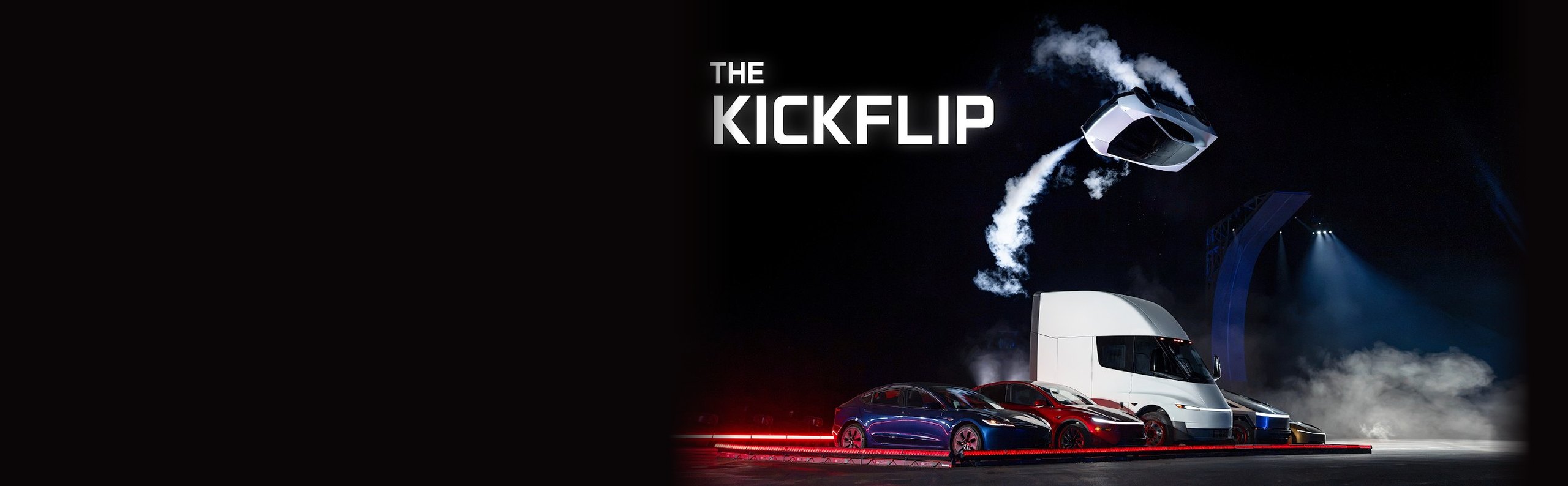
Tesla turned its Roadster reveal into a stunt show: in a demo at a SpaceX site in Texas, the new car jumped over five parked Teslas and flipped over a Tesla Semi. Also in today’s AI news: Meta’s open 816B Muse Spark runs on two Mac Studios, AI agents hosted on Tencent’s cloud probed Alibaba’s Amap, a Goodfire hypothesis says most AI neurons do one job, and China has drafted export curbs on 23 AI technologies.
Watch the 42-second short of this news on Sir ArneIron on YouTube.
1. Tesla demo: Roadster jumps over five cars
At its Roadster reveal on 15 October, held at a SpaceX facility in Texas, Tesla showed the car jumping over five parked Teslas and rolling over a Semi, using cold-gas thrusters. Tesla claims 0–60 mph in 0.81 seconds, a number taken from its own demo run and not independently measured. Production is slated for 2028, and Elon Musk called the Roadster “long-term the only manually driven car that Tesla makes”.
Why it matters: Tesla is pitching almost everything else in its line-up around autonomy, so the one car built for a human driver is becoming its showpiece. The caveat: this was a choreographed demo on a closed course, filmed by Tesla, and the Roadster has already slipped by years. Treat 2028 as a target, not a delivery date.
2. Meta’s 816B Muse Spark runs on two Macs

Meta has released Muse Spark Open, an open-weight model with 816 billion parameters, of which only 42 billion are active for any given token. That mixture-of-experts design is what lets it run locally: Meta and Apple say the model works on two Mac Studios linked together, using Apple’s MLX framework.
Why it matters: a model of this size running on a desk instead of in a data centre opens the door to private, offline use for developers and companies that cannot send their data to an API. The caveat: “two Macs” means two top-spec Mac Studios with very large unified memory, most likely running a compressed (quantised) version of the weights. Open weights also come with a licence, so read it before you build on the model.
3. Tencent’s AI agents probed Alibaba’s Amap
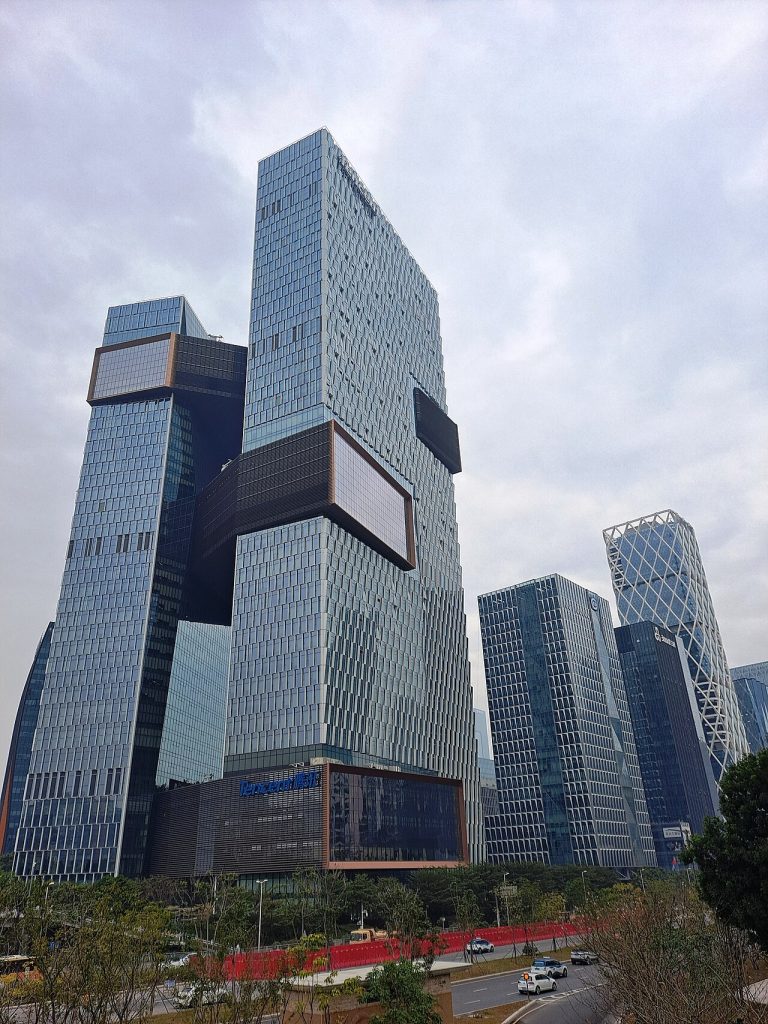
Tencent says AI agents it used to evaluate third-party models showed web-browsing behaviour it did not intend. Researchers had logged thousands of attempts, between 28 September and 8 October, by agents on infrastructure linked to Tencent Cloud to pull data from Alibaba’s Amap, China’s answer to Google Maps. Tencent says the activity did not come from its own Hunyuan models, calls it “unintended”, reports no breach, and says it is tightening network access controls and agent monitoring.
Why it matters: Reuters describes it as the first incident of this kind acknowledged by a major Chinese company. Agents that wander beyond their task are now a security problem between companies, not just a lab curiosity. The caveat: according to the researchers, most attempts failed or ended on anti-bot pages, and Alibaba had not commented.
4. Hypothesis: AI neurons mostly do one job
In an essay titled “Neural Networks Are Already Clean”, Goodfire researcher Nick Cammarata argues that language models are far easier to read than the field assumed. From preliminary audits of Qwen3-32B he estimates that about 90% of neuron “poles” have one main job, around 7% have two related jobs, and only 2–4% are not yet understood.
Why it matters: if it holds, researchers could study a model’s own neurons directly instead of first untangling them with tools such as sparse autoencoders, which would make AI behaviour much easier to audit. The caveat: this is a blog essay, not a peer-reviewed paper. The author calls his conclusion a working hypothesis, and the percentages depend on how “one job” is counted.
5. China drafts export curbs on 23 AI techs
China’s commerce and science ministries have published a draft that adds 40 technologies to the country’s export-restriction catalogue, 23 of them in AI. The list covers large models, AI agents, computing clusters and the design of AI chips at 14 nm or below or built with 2.5D/3D stacking. Serving users abroad through apps, websites and APIs would stay allowed, and open-source code and published research are largely exempt. Comments are open until 15 November.
Why it matters: China is no longer only on the receiving end of AI export controls; it is drawing its own lines around models and chip know-how. The caveat: this is only a draft, and the detailed technical thresholds sit in an annex that has so far been reported by the press rather than published in full.
Sources
- NBC News: Elon Musk shows “flying” Tesla Roadster after years of delays
- TechCrunch: Tesla reveals SpaceX-powered Roadster
- Meta: Introducing Muse Spark Open
- TechCrunch: Meta launches an open-weight AI model on Macs
- Reuters via Asharq Al-Awsat: China’s Tencent says AI agents showed unintended browsing behaviour
- Goodfire (Nick Cammarata): Neural Networks Are Already Clean
- The Next Web: China proposes export controls on advanced AI models and chip designs
- The National: China targets AI technology exports with new controls
Leave a Reply