

A robot dog hauling a tower of boxes up old temple stairs opens this edition, followed by a drone that picks out a person and follows them with no pilot. Then a record robotics seed round in London, signs that the Nvidia-only era of AI chips is cracking, and Google DeepMind’s Genie 4, which turns one sentence into a world you can walk around in.
Watch the 42-second short:
Also on Telegram: t.me/arniron/38
1. Robot dog hauls a tower of boxes up temple stairs
A clip from China shows a four-legged robot dog climbing worn stone temple steps with a tall stack of boxes strapped to its back, while tourists stop to film it. The idea behind it is simple: stairs, narrow lanes and hillside paths are where carts, scooters and vans give up, and a legged robot can act as a small cargo carrier for exactly those last metres.

For anyone who has carried shopping up an old-town staircase, the appeal is obvious. Caveat: this is a social-media clip. Where exactly it was filmed, which company built the robot and whether it is a regular service or a one-off demonstration has not been independently confirmed.
2. AI drone locks on to a person and follows them, no pilot
A viral screen recording shows an FPV drone that builds its own obstacle map from its camera, draws a green box around a person with the label ‘target LOCKED’ and then follows them, according to the poster even through a forest while dodging branches. The clip’s description says it needs no pilot, no GPS and no internet connection: everything runs on board.
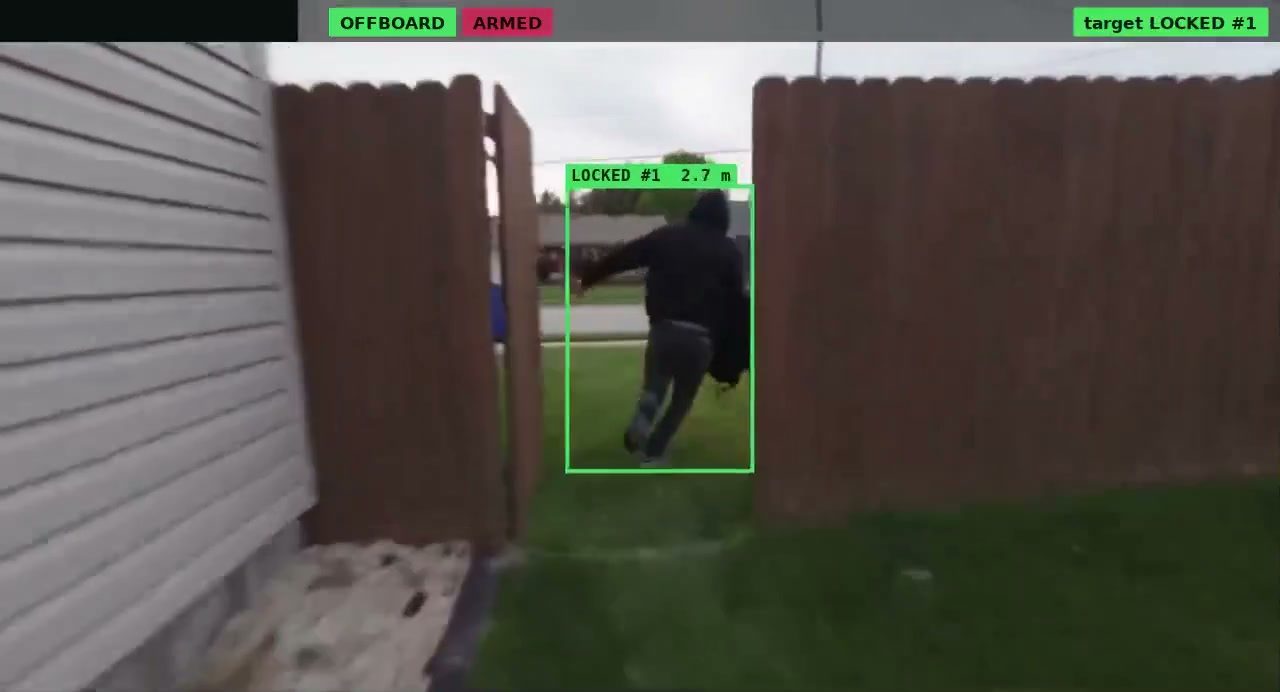
Technically this is the direction small drones are heading, from sports filming to search and rescue. It also raises obvious questions about surveillance and military use. Caveat: the source is a viral clip with no named developer, and the claims about GPS and internet have not been tested independently.
3. London’s Machenta raises a record $40M seed to teach robots fast
Machenta, a spinout from Imperial College London founded in 2025 by Professor Edward Johns and his former PhD student Vitalis Vosylius, came out of stealth with a $40 million seed round co-led by Creandum and Union Square Ventures. Imperial calls it the largest seed round ever raised by a UK robotics company.
Machenta’s ‘Instant Robot Learning’ model is trained entirely in simulation. After seeing a task once, a robot is meant to repeat it without further training, shown on packing, assembly and tidying across several robot types, including humanoids. The money goes on hiring, compute and a lab in King’s Cross. Caveat: so far these are the company’s own demonstrations, from a team of 11.
4. OpenAI eyes Google TPUs as the Nvidia-only era cracks
OpenAI is reportedly planning to buy Google’s TPU chips, according to The Information and Reuters; neither company has confirmed it. In the same week Oracle said its cloud will be the first outside Google to offer Google TPUs (TPU 8t and 8i, in 2027), and will add Cerebras and SambaNova chips next to Nvidia’s Vera Rubin NVL72 systems, which are now generally available on Oracle Cloud.

Nvidia is not being pushed out: Oracle is still expanding its Nvidia build-out to multi-gigawatt scale. But the biggest buyers clearly want a second source and lower prices. Caveat: the OpenAI report is unconfirmed, and Oracle’s TPUs only arrive next year.
5. Genie 4 turns one sentence into a world you can explore
Google DeepMind has announced Genie 4, a world model that turns a text or image prompt into a photorealistic world you can move through in real time. It is the first Genie to generate sound natively, including ambient noise, music and dialogue. While the world runs, you can steer it in plain language: change the weather, move the camera or add a character. Scenes stay consistent for up to two minutes, twice as long as Genie 3.
For now only trusted testers can use it; Google AI Ultra subscribers and Gemini API partners are next, with no date or price yet. DeepMind itself warns that details can drift in longer sessions.
Sources
- Imperial College London: Imperial AI spinout Machenta raises $40 million
- Tech.eu: London robotics startup Machenta raises $40M seed
- Data Center Knowledge: Oracle Cloud to offer Google TPUs and new AI chips
- Google DeepMind: Genie 4, a new generation of world simulation
- TechCrunch: Google’s Genie 4 world model adds audio and real-time steering
Leave a Reply