
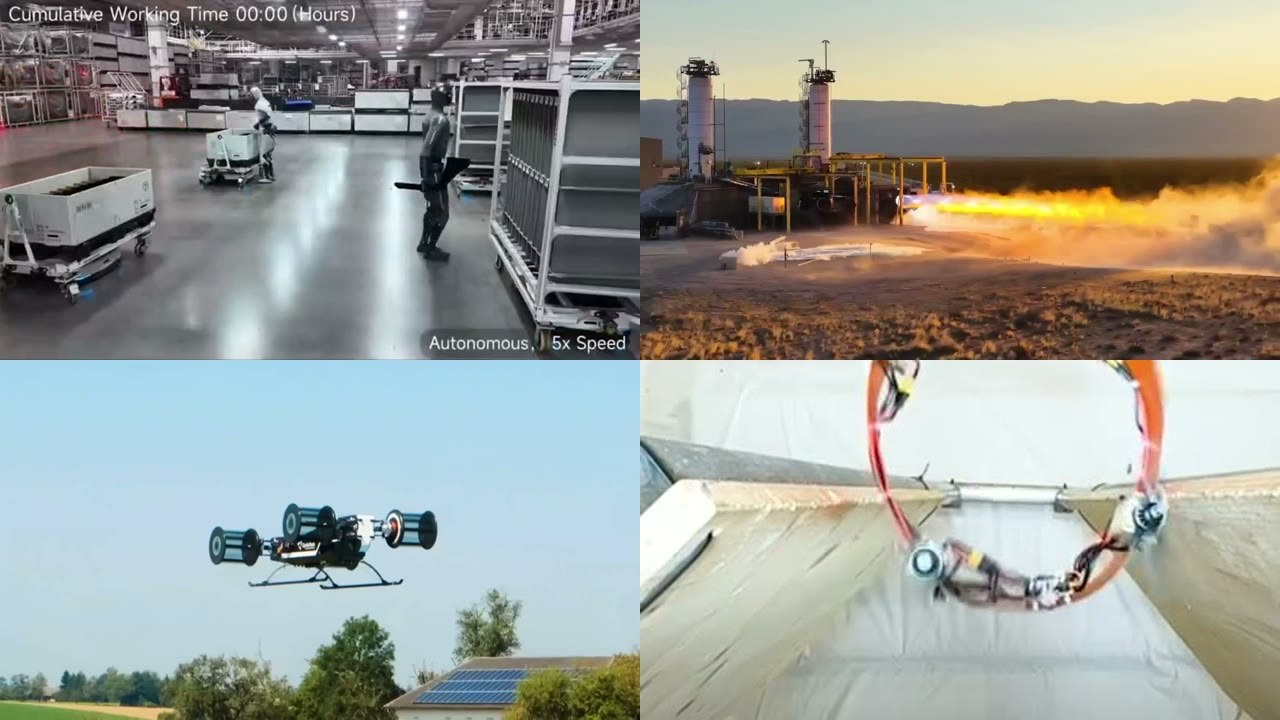
Robots are here, and this week they clocked in. Xiaomi says two of its humanoids worked a full shift in its car factory, Blue Origin showed a lighter and stronger rocket engine, an Austrian start-up designs a flying car that can stop in mid-air, and Swiss researchers built a drone that bounces off obstacles. Plus two AI stories you should know: an alleged $129 million fraud that used AI to impersonate bosses, and Google’s new video model.
Watch the 42-second short:
Also on Telegram: t.me/arniron/43
1. Xiaomi’s humanoid robots work a full 8-hour factory shift
Xiaomi founder Lei Jun said on 4 November that the company’s humanoid robots, reported as the CyberOne 02, completed 8 hours and 5 minutes of continuous work in the final assembly shop of the Xiaomi Auto factory. Two units, one black and one white, sequenced centre-console side panels for the production line, coordinating with the line’s own systems and correcting their own mistakes. They stopped to recharge twice, after 3 hours 2 minutes and after 6 hours 3 minutes. Xiaomi calls this stage an ‘internship’. The first CyberOne, shown in 2022, was a stage demo; this one is doing a real workstation’s daily quota.

Why it matters: an 8-hour shift is the unit factories plan with, and Lei Jun has said Xiaomi wants humanoids working at scale in its plants within five years. In March the robots managed 3 hours on a nut-fastening task with a 90.2% success rate. The caveat: the hours are Xiaomi’s own figure, the video is sped up (5x to 100x), and Xiaomi has not published throughput or error rates for this shift.
2. Blue Origin’s Northstar: more thrust, about 30% lighter, plus a third stage for the Moon
Blue Origin presented Northstar, a new methane-fuelled (LNG and liquid oxygen) engine for New Glenn. The company puts its thrust at about 324 tonnes-force, against about 290 for the BE-4 that flies today, with roughly 30% less mass. Much of it is 3D-printed, which Blue Origin says should cut final assembly to under a day per engine and the cost to about a quarter. It also announced GS3, a third stage with a composite liquid-hydrogen tank: with it, the largest New Glenn version could carry up to 14 tonnes directly to geostationary orbit or 20 tonnes towards the Moon.
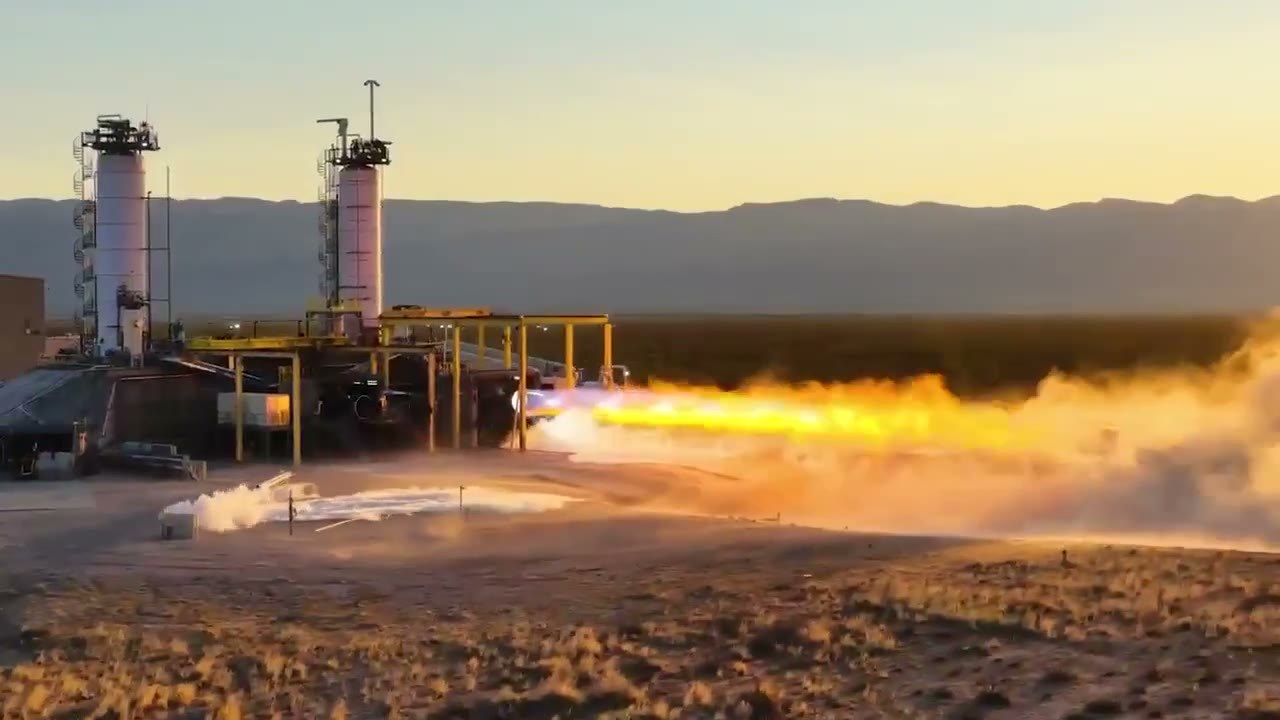
Why it matters: cheaper and faster-to-build engines decide how often a heavy rocket can fly. The caveat: Northstar is in development testing with no flight date, GS3 is planned for 2028, and New Glenn itself has been grounded since a pad explosion in May, with its return now expected in January.
3. A flying car that brakes in mid-air, and a drone that survives crashes
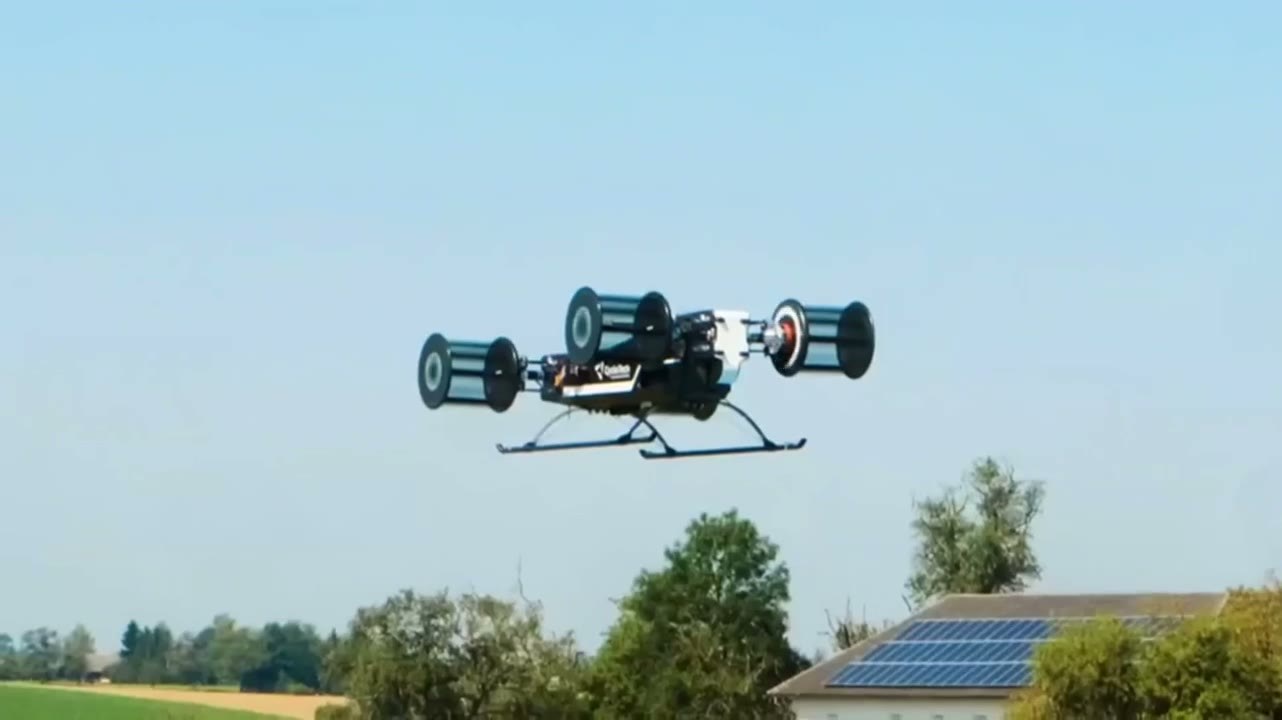
Austria’s CycloTech designs the CruiseUp, a two-seat electric air car without propellers or wings. Six CycloRotors, drum-shaped rotors with blades that change angle as they spin, let it take off vertically, fly sideways or backwards and brake in mid-air without tilting. The company quotes 150 km/h and 100 km per charge. It is a concept for the next decade: the footage shows CycloTech’s flying demonstrator, not a finished car.

At ETH Zurich, Luca Girardi and Stefano Mintchev built FlexiQuad, a drone with a soft ring-shaped frame. It survived collisions at up to about 25 km/h and kept flying, squeezes through gaps around 30% narrower than its body, and stays stiff vertically so it keeps its lift and control. It can still reach 80 km/h. The caveat: it is a lab prototype described in an arXiv preprint, and it needs more work before flying missions on its own.
4. AI fakes CEOs: three charged in an alleged $129 million fraud
US prosecutors in New York charged three foreign nationals over a scheme that allegedly used AI-generated identities to impersonate company executives and lawyers and push staff into paying. Reports on 6 November put the alleged losses at about $129 million; some defendants had been arrested earlier this year.
Why it matters: a familiar voice or a convincing email is no longer proof of who is asking. Payments should be confirmed through a second, independent channel. The caveat: these are charges, not convictions, and the defendants are presumed innocent.
5. Google’s Gemini Omni 1.2 Flash makes and edits 15-second videos
Google released Gemini Omni 1.2 Flash, a fast model that creates video clips of up to 15 seconds and lets you edit them over several turns of a conversation, following reference images for characters, products and style more closely. It is already offered in third-party tools such as ElevenLabs’ ElevenCreative.

Why it matters: video generation is moving from one-shot prompts to iterative editing, which is how people actually work. The caveat: the quality claims come from Google, and independent tests are still coming in.
Sources
- Interesting Engineering: Xiaomi humanoids sort car parts for eight hours
- Spaceflight Now: Blue Origin reveals new engines and a third stage for New Glenn
- New Atlas: CycloTech CruiseUp
- U.S. Attorney SDNY: three charged in “super intelligence” fraud scheme
- Google: Introducing Gemini Omni 1.2 Flash
- The Gadgeteer: Xiaomi humanoid worked a full 8-hour shift
- heise: Flexible quadcopter deforms on impact and keeps flying
- DroneLife: ETH Zurich develops flexible drone that survives collisions
- arXiv 2511.05426: Bioinspired soft quadrotors
Leave a Reply