Five stories from the last 48 hours: a new calculation on why our universe has exactly one dimension of time, the money behind Anthropic’s stock-market debut, an AI model that reads and rewrites another model’s weights, American voters turning against data centres, and Nvidia’s Chinese order backlog. Each section says what happened, why it matters and what is still unclear.
Watch the 42-second short:
Also on Telegram: t.me/arniron/42
1. A new theory on why the universe has only one dimension of time
Why does space have three dimensions and time only one? Physicists Mihailo Djordjevic, Igor Prlina and Marko Vojinovic of the University of Belgrade tried to get the answer out of quantum gravity instead of assuming it. In a toy model based on quantum Regge calculus, spacetime is built from tiny four-dimensional building blocks (4-simplices) whose edge lengths are chosen at random, with the Planck length as the smallest size. Across more than 20 billion evaluations, the blocks came out with our familiar signature, three of space and one of time, about 85% of the time, ScienceAlert and Hightech+ report. About 6% gave a ‘frozen’ universe with four space dimensions and no time, and about 8% a split universe with two of each.
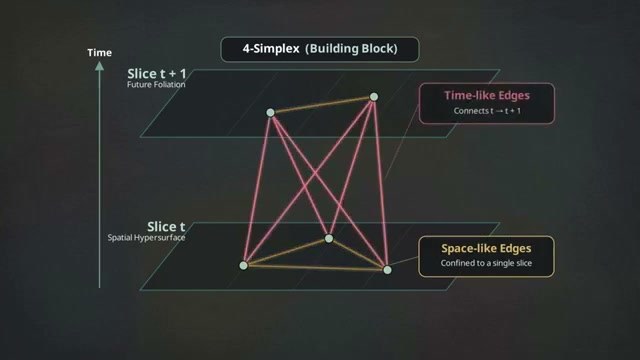
Why it matters: in textbook physics the one-time-dimension rule (the Minkowski signature) is simply assumed. This work suggests it could instead be predicted, as a statistical outcome of how spacetime is built at the smallest scale. The caveat: it is a toy model that ignores dynamics, the 85% holds only for a chosen range of edge lengths and cut-off (with time-like edges allowed, the split signature dominates at 72–81%), and the paper is an arXiv preprint (2610.31776), not yet peer reviewed.
2. Anthropic’s IPO: an $895 billion compute bill against $96 billion in cash
Anthropic’s amended IPO filing (S-1/A) to the US SEC shows how much money its growth needs. As of 30 September 2026 the company had committed to $895.4 billion in future computing purchases, about $447.5 billion of it before the end of 2030 and $69.8 billion within twelve months. Against that it held $95.6 billion in cash and $36.3 billion in short-term investments, plus $14.8 billion available under a credit facility. Revenue reached $33.2 billion in the first nine months of 2026, up 1,206%, yet the net loss was $104 billion, mostly from non-cash revaluations of convertible notes and similar instruments; the operating loss was $1.26 billion. The filing also says internal Claude use, valued at list prices, grew more than 250 times from January to September and from April exceeded monthly personnel expense (excluding stock-based compensation), and that about 90% of code contributions in September were written by Claude.
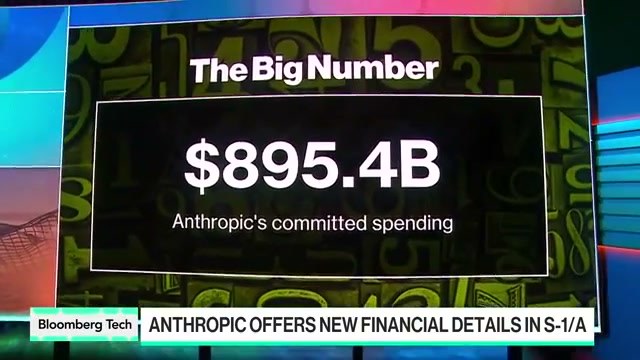
Why it matters: the IPO is meant to fund a compute build-out larger than the company’s current balance sheet, at a time when capital is getting tighter. Fortune reports that OpenAI cut its own funding target to about $20 billion from $30 billion (per the Financial Times), S&P moved Meta’s credit outlook to negative and a large European bank said it is nearing its lending limit to the sector. The filing itself warns that missing obligations under its credit agreement or convertible notes could trigger cross-defaults. The caveat: these are risks the company discloses, not a forecast that the listing will fail. Pricing is expected in the week of 16 November. This is not investment advice.
3. An AI model rewrote another AI’s weights and made it 6x better at maths
Researchers at MIT CSAIL (Rikiya Takehi, Jayden Teoh, Alex Zhang and Omar Khattab) gave OpenAI’s GPT-6 Astra raw neural-network weights and asked it to work out what they do and change them, without gradient descent or training loops. Astra traced the endless ‘thinking loops’ of the small open model Qwen3.5-0.8B to one direction in two layers and removed it, changing 131,072 weights, about 0.016% of the model. MATH-500 rose from 7.9% to 48.1%, GSM8K from 13.8% to 67.1%, and answers running into the token limit fell from 93% to 33%. In another test it wrote tiny game-playing networks from scratch that scored 517.4 in Breakout against 15.8 for a PPO agent trained for 100 million steps. The edited Qwen model is public on Hugging Face, where Ahsen Khaliq rebuilt it from the released logs.
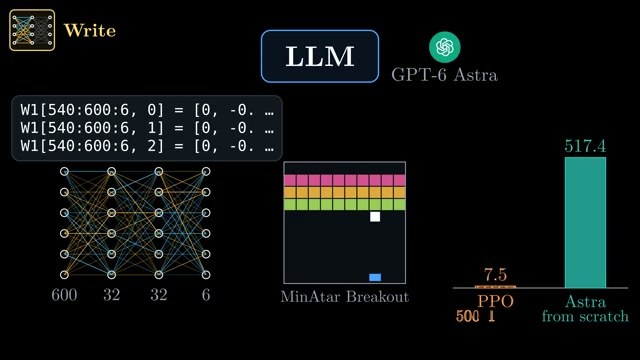
Why it matters: a strong model reading and repairing another network’s internals points to a new way of fixing and building small models. The caveat: the authors call these very early results. The big Qwen jump mostly removes a known looping bug rather than teaching new maths, Astra could not improve Google’s Gemma 3 270M (7.7% vs 6.8%), with fewer test passes the loops barely went away, and it failed to tell from weights alone which model had been trained to be sycophantic. This is not a model improving itself toward AGI.
4. US voters turn against data centres at the ballot box
In the 3 November US midterms, voters rejected data centres in almost every local ballot measure on them, CNBC reports; Ohio alone held 21 measures in 18 municipalities. In Texas, Democrat Gina Hinojosa won the governor’s race after campaigning for a pause on new data-centre projects until the state adopts tougher rules on water, power and land; Texas holds about 27% of planned US data-centre gigawatts, according to Wells Fargo. On 4 November CoreWeave and Iren fell about 4% in morning trading, CNBC reports.
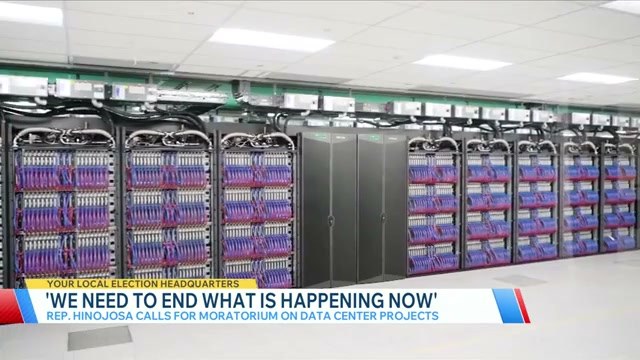
Why it matters: the AI build-out depends on local permits, power and water, and voters now have a direct say. Anthropic’s own IPO filing lists data-centre moratoriums as a risk to its compute supply. The caveat: many measures are local or non-binding, and the Texas legislature remains Republican, so the scope of any statewide pause is not yet clear.
5. China’s tech giants may get about 1% of their Nvidia chip orders soon
ByteDance, Alibaba and Tencent ordered Nvidia RTX Pro 5500 cards, the most capable AI-ready chip they are allowed to buy, worth about $70 billion, Bloomberg reports via Tom’s Hardware. Buyers expect only about 1% to arrive in the next four months because supply is tight. In October Reuters reported orders of more than $35 billion.
Why it matters: Chinese AI still leans on Nvidia hardware despite efforts to build home-grown chips, and supply, not demand, is now the bottleneck. The caveat: neither Nvidia nor the buyers have confirmed the figures, the reports differ on order size, and a delay is not a cancellation.
Leave a Reply