

Transport for London says about 265,000 Oyster photocard customers may have had their account details exposed, and it has taken the photocard website offline. This article also covers Google’s Gemini 4 Neon release, TSMC’s curbs on some China chip orders, the European Commission’s AI-generated cyberattack, South Korea’s $1 trillion export mark, Nvidia’s leadership change and Gemini’s new Mac abilities.
Watch the 42-second short of this story: YouTube @SirArneIron · Telegram t.me/arniron
TfL says 265,000 Oyster photocard accounts may be exposed
Transport for London announced that about 265,000 Oyster photocard customers may have had their account details exposed. The Register reports that attackers compromised customer accounts and that TfL took the Oyster photocard website offline in response. The Register describes the incident as another security breach for the London transport operator.

For customers, the practical effect is that the photocard website is unavailable while the situation is dealt with, and a large group of account holders may be affected. The figure is worded cautiously: TfL says the accounts “may have” been exposed and gives the number as “around” 265,000, so the confirmed total is not established. The reports in hand also do not specify exactly which account details were involved, so readers should wait for TfL’s own guidance on what, if anything, they need to do.
Google releases Gemini 4 Neon at $3 and $15 per million tokens
Google released Gemini 4 Neon on 2026-11-18 with a 1 million-token context window. List prices are $3 per million input tokens and $15 per million output tokens. The Indian Express reports that Neon replaces Gemini 4 Argon in the Gemini app and that Google shut down Gemini 3.1 Pro.

Google says Neon scores 61 on the Artificial Analysis Intelligence Index, ranking #3 overall at its xhigh thinking level. The pricing and context size matter for developers weighing costs against capability, and the app change affects anyone who used the older models. The benchmark ranking, however, comes from Google itself and is repeated by the other outlets rather than independently confirmed, so it is best read as a vendor claim until further testing appears.
TSMC and Nvidia curb AI chip supply to China after new US rules
Reuters, citing two people familiar, reports that TSMC is suspending some previously permitted advanced manufacturing orders from Chinese chip designers. It is generally limiting affected customers to older chipmaking technology after new US rules closed a manufacturing loophole. Yahoo Finance reports that chip giants have suspended shipments to China. The Neuron says Nvidia stopped shipping certain AI chips to China even after Washington cleared them for sale.
The reports suggest the new rules are reaching both contract manufacturing and chip shipments, which could narrow what Chinese designers can build. The Reuters account rests on two unnamed people rather than an on-record statement, and the scope is described only as “some” orders and “certain” chips. The full extent of the suspensions is therefore not clear from these reports.
European Commission confirms AI-generated cyberattack
A Commission spokesperson said the EU was targeted by an “AI-generated cybercampaign”. DW says this is the first time the bloc has publicly reported an AI-based cyberattack. Kathimerini dates the attack to October and says some digital tools remain offline. The Register reports that staff HR and medical reimbursement systems were taken offline while officials check whether personal data was compromised.

The case matters because it is an official acknowledgement that AI tools were used against an EU institution, and because staff systems holding sensitive records were disrupted. What remains unknown is the damage: Euronews says the extent of any data leak is unknown, and the Commission is still checking whether personal data was compromised. Further detail on the attack itself has not been reported in the sources used here.
South Korea’s exports pass $1 trillion for the first time on AI chips
South Korea’s cumulative exports surpassed $1 trillion for the first time, according to the Korea Herald, Yonhap and Kazinform. The Korea Herald says it is the fourth country to reach the level after Germany, the US and China, and the first new entrant in 19 years. All three outlets attribute the rise to semiconductors for AI infrastructure.
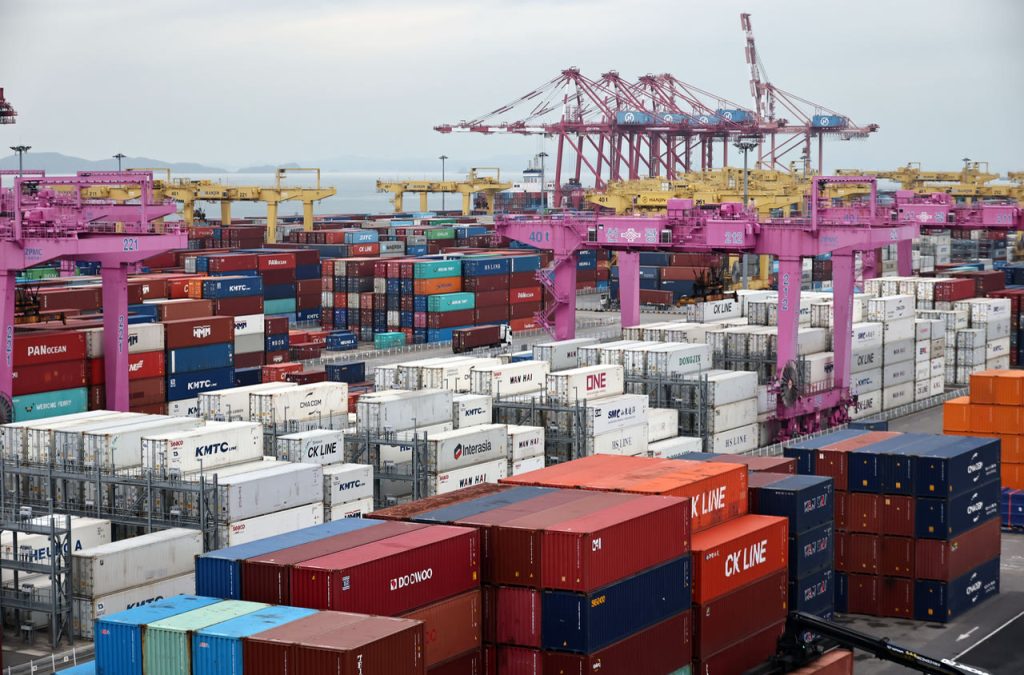
The milestone shows how strongly demand for AI hardware is feeding into national trade figures. The reporting is consistent on the cause, but it is limited to three outlets, and the ranking among countries and the 19-year gap are stated by the Korea Herald alone. The reports describe the figure as cumulative exports, and the material available gives no more precise total than “above $1 trillion”.
Jensen Huang leaves Nvidia CEO role; Colette Kress is interim chief
Colette Kress is serving as Nvidia’s interim CEO after Jensen Huang’s exit, according to TechCrunch and Wired. The National and El Pais link the exit to an affair with a Megaspeed executive described as an alleged or suspected Chinese spy. The evidence does not establish that allegation, and it should be treated as unproven.

TechCrunch separately reports that Nvidia did not file its routine quarterly 10-Q report, which it said it would not file for weeks. That filing detail comes from one source, TechCrunch. A change at the top of a company this central to AI hardware draws wide attention, but the reasons for the departure and any link to the missing filing have not been confirmed in the sources used here.
Gemini app for macOS gains computer use
Google’s Gemini app for macOS can now work across local files, desktop apps and the web on multi-step tasks, according to The Verge. TechCrunch lists organizing files and filling out forms as examples of what it can do.

The update moves Gemini from answering questions toward carrying out tasks on a user’s own machine, which raises the stakes for how reliably it handles files and forms. The reporting available is short and comes from two outlets, so details such as how well it performs, what permissions it needs and who can use it now are not covered here.
Sources
- bleepingcomputer.com: TfL: 265,000 Oyster accounts may be exposed
- theregister.com: TfL: 265,000 Oyster accounts may be exposed
- blog.google: Gemini 4 Neon: 1M context, $3 / $15
- indianexpress.com: Gemini 4 Neon: 1M context, $3 / $15
- investing.com: TSMC pauses some China chip orders
- finance.yahoo.com: TSMC pauses some China chip orders
- dw.com: EU Commission confirms AI-made cyberattack
- ekathimerini.com: EU Commission confirms AI-made cyberattack
- theregister.com: EU Commission confirms AI-made cyberattack
- koreaherald.com: South Korea exports pass $1 trillion
- en.yna.co.kr: South Korea exports pass $1 trillion
- techcrunch.com: Nvidia: Colette Kress now interim CEO
- wired.com: Nvidia: Colette Kress now interim CEO
- theverge.com: Gemini for macOS now works across your apps
- techcrunch.com: Gemini for macOS now works across your apps