
Five stories from the last 24 hours in AI and tech: the supermarket fridge hacks keep spreading across Europe, Britain’s cyber agency puts a date on the AI ransomware threat, Anthropic’s stock-market debut comes into view, an adviser to the EU’s top court weighs in on Google’s AI answers, and Mercedes brings ByteDance’s AI into a car built for China. Each section says what happened, why it matters and what is still unclear.
Watch the 42-second short:
Also on Telegram: t.me/arniron/41
1. Supermarket fridge hacks now reported in 9 European countries
The wave of attacks on supermarket refrigeration systems keeps spreading. Euronews counted 9 European countries with reported incidents on 3 November, after France was hit first in October. Italy’s government held emergency talks with industry. Refrigeration maker Danfoss told Belgian broadcaster VTM the weakness lies mainly in outdated software, and that customers who had not updated were affected.

Why it matters: food retail runs on internet-connected cooling, and spoiled stock and closed aisles are physical, costly damage. The caveat: nobody has claimed the attacks and no authority has named a perpetrator. Country counts reflect reporting at the time, not a final incident census, and there is no evidence the attackers used AI.
2. UK warns of an AI-powered ransomware attack on infrastructure by 2028
The UK’s National Cyber Security Centre said in its annual review on 3 November that a ransomware attack using AI-powered malware against the country’s critical national infrastructure is ‘highly likely’ by 2028. It describes AI as a force multiplier that speeds up every stage of an attack, and names China as likely the best equipped to carry out such operations. NCSC chief Richard Horne warned of a possible unprecedented rise in incidents because long-tolerated weaknesses can now be found and exploited at scale.

Why it matters: the warning is less about futuristic AI hacking than about old, unpatched systems becoming much cheaper to attack. The caveat: this is a forecast, not a report of an attack that has already happened.
3. Anthropic’s IPO comes into view
Anthropic’s stock-market listing is approaching: CNBC reports that pricing and the first day of trading are expected in the week of 16 November. Spain’s Cinco Días reported on 3 November that small Spanish investors may be able to take part in the offering.
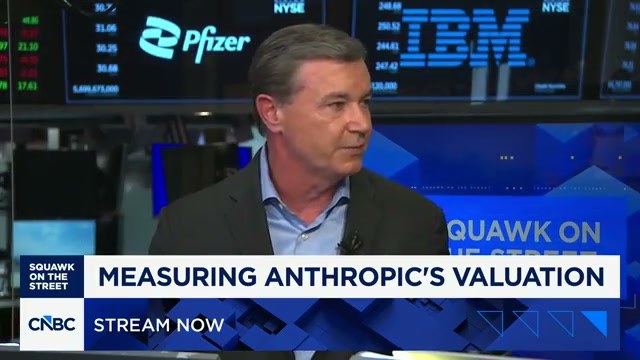
Why it matters: it would be one of the largest technology listings ever and the first time ordinary investors can buy a stake in a frontier AI lab directly. The caveat: the share price and final timing are not set, and access through any particular broker is not guaranteed. This is not investment advice.
4. EU court adviser: Google’s AI answers may need publishers’ permission
An Advocate General of the Court of Justice of the European Union said on 3 November that showing press content inside Google’s AI-generated answers can fall under publishers’ rights, Reuters reports. In other words, reproducing identifiable journalism in an AI answer is a separate act from training a model or linking to an article. Google welcomed the part of the opinion saying EU law allows AI training on publicly available information; the European Publishers Council welcomed the rejection of automatic consent.
Why it matters: if the court follows the opinion, AI answer engines in the EU may need licences for the news content they display, which changes the economics between publishers and AI companies. The caveat: an Advocate General’s opinion is not binding. The court’s final judgment usually comes months later and can differ.
5. Mercedes puts ByteDance’s AI into the China E-Class
Mercedes-Benz’s long-wheelbase E-Class for China, sold as the E 300 L, now comes with ByteDance’s Doubao AI assistant and a China-developed digital cockpit, TechNode reports. Prices range from RMB 423,800 to RMB 509,800.

Why it matters: a German carmaker is using a Chinese AI model in the Chinese market, a concrete example of how global brands localise their AI stack by region. The caveat: the in-car assistant’s features and data handling are described by the companies; there is no independent test yet.
Leave a Reply