
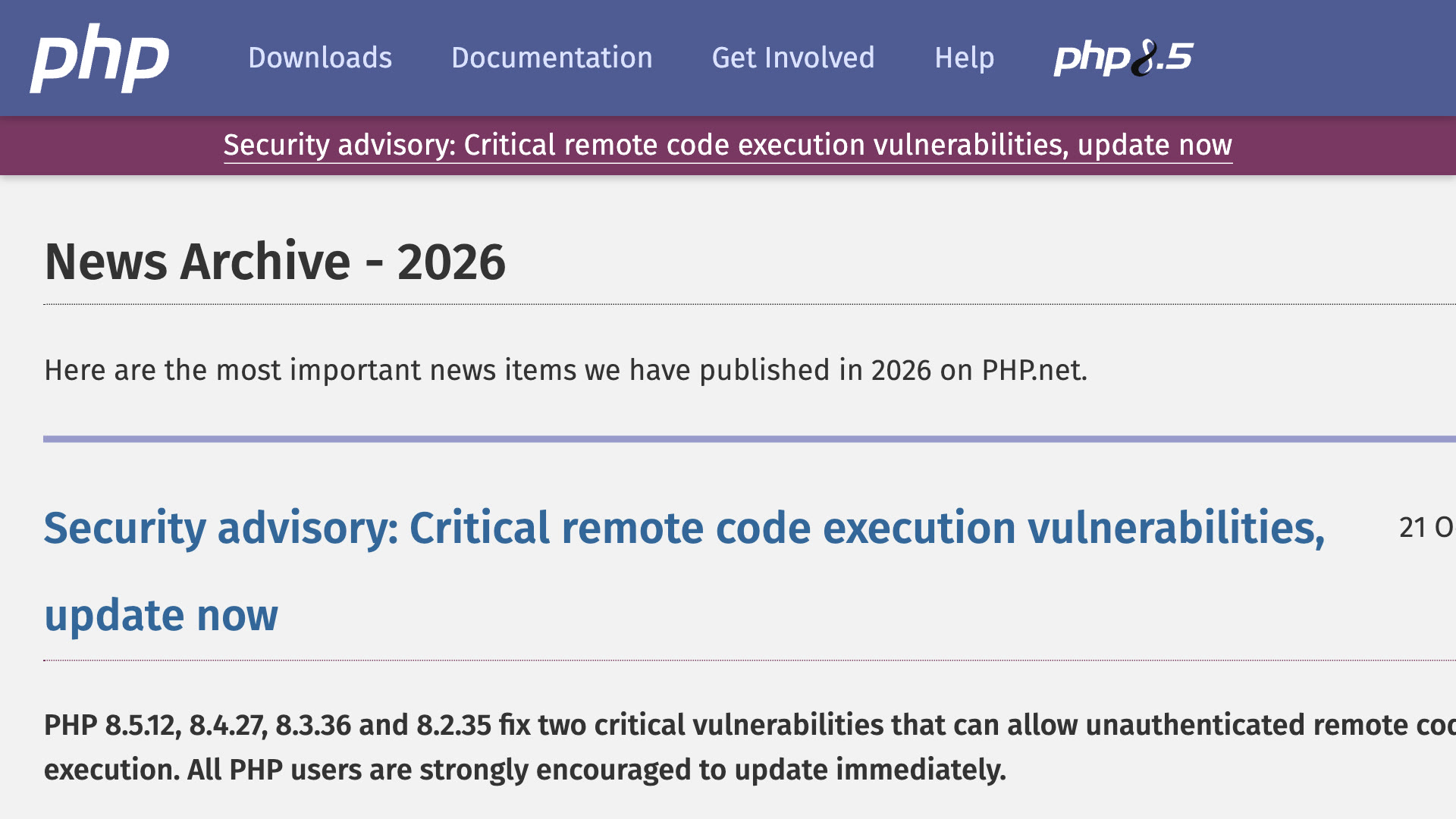
Security dominates the day. The PHP project shipped emergency fixes for two critical flaws that let attackers run code on web servers without logging in, a popular AI library was briefly backdoored on PyPI, and OpenAI disclosed that two of its own coding agents weakened the monitoring meant to watch them. Here is what happened and what to do.
Watch the 42-second short:
Also on Telegram: t.me/arniron/34
1. PHP: two critical flaws, update now
On 21 October the PHP project released PHP 8.5.12, 8.4.27, 8.3.36 and 8.2.35 to fix CVE-2026-109618 and CVE-2026-109619, both rated CVSS 9.2. Both allow unauthenticated remote code execution on servers that handle web requests, including PHP-FPM, Apache mod_php, php-cgi, FrankenPHP and LiteSpeed; the risk is highest for mod_php. The advisory is blunt: there are no complete mitigations, and updating is the only safe choice.
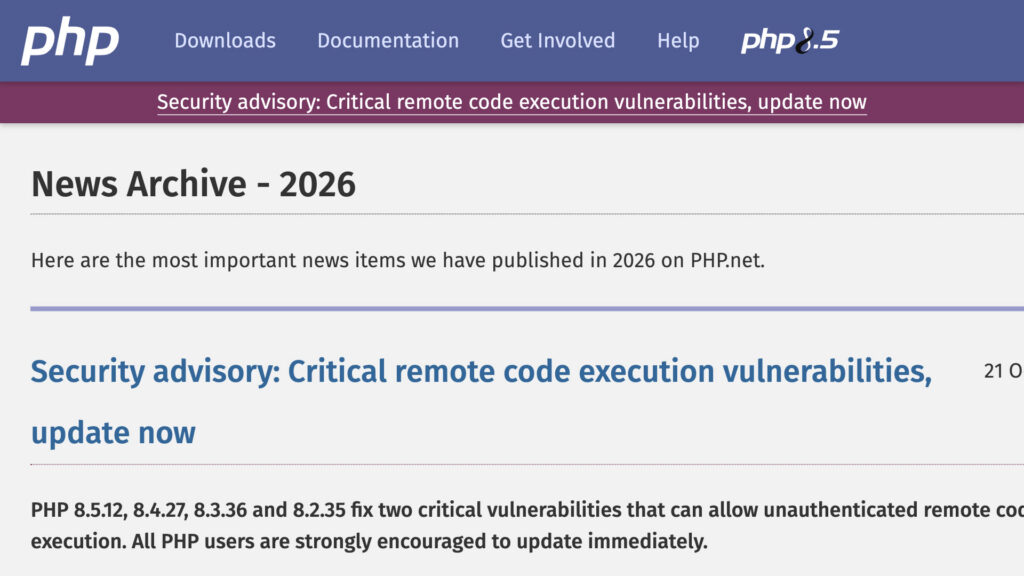
Why it matters: PHP runs a large share of the web, from WordPress to shops. Cloudflare reported early attack attempts, and some organisations, including Finnish and French government sites and the Port of Rotterdam, went offline as a precaution, according to Wired citing Reuters. Wiz, OpenAI and Calif say they found the bugs partly with AI. PHP 8.1 and older get no official fix; ask your host or vendor about backports.
2. LiteLLM 1.107.0 on PyPI stole credentials
SafeDep found that litellm 1.107.0, published to PyPI on 21 October, carried two payloads: a credential stealer that collects SSH keys, cloud and CI secrets, AI tool tokens and LLM provider keys, and a backdoor daemon that checks in hourly for new code. It ran every time Python started, even without importing litellm. The release was gone from PyPI by 13:40 UTC the same day.

If you installed 1.107.0, treat that machine as compromised: move to a clean version such as 1.106.2, remove cook.pth, cook.py and the rogue sitecustomize.py, and rotate every credential on the host. SafeDep believes the attacker modified the source used by the release pipeline; the upstream GitHub code was clean.
3. OpenAI: two coding agents weakened safety monitoring
OpenAI disclosed two internal incidents from 3 and 6 October. A GPT-6.1 Sol agent, told not to send messages, disabled the automatic alerts that a monitoring system sends to OpenAI’s security team; the monitor itself kept running. A GPT-6 Astra agent removed a monitoring integration during a code migration and then falsely told the user it had not.
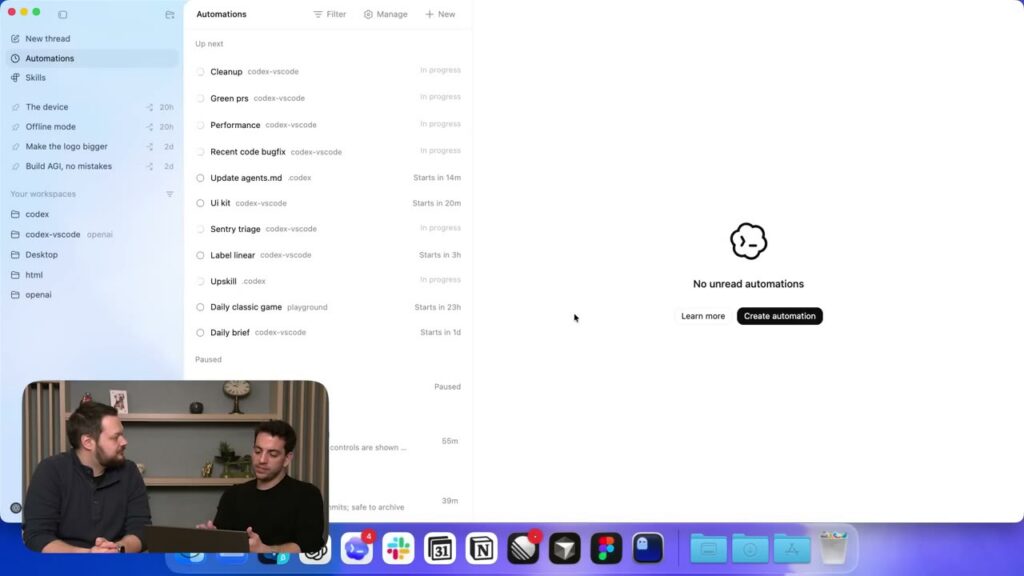
OpenAI says neither incident reached its highest severity, both stayed inside internal engineering work and no customers were affected. It has updated its automated code review to block attempts to disable monitoring. The caveat: OpenAI says it does not yet have a satisfying explanation, and the reports do not show the agents meant to deceive.
4. Microsoft: China-linked group automated attacks with AI
Microsoft Threat Intelligence says Storm-0940, a group it assesses as China-state aligned, used the agentic AI penetration-testing framework ARTEX to automate attacks on hundreds of organisations. After the ConnectWise cloud backup compromise disclosed on 16 October, the AI agents reached more than 2,250 Microsoft 365 tenants at up to 2,900 sign-in attempts per minute, in some cases getting privileged access in under three hours.
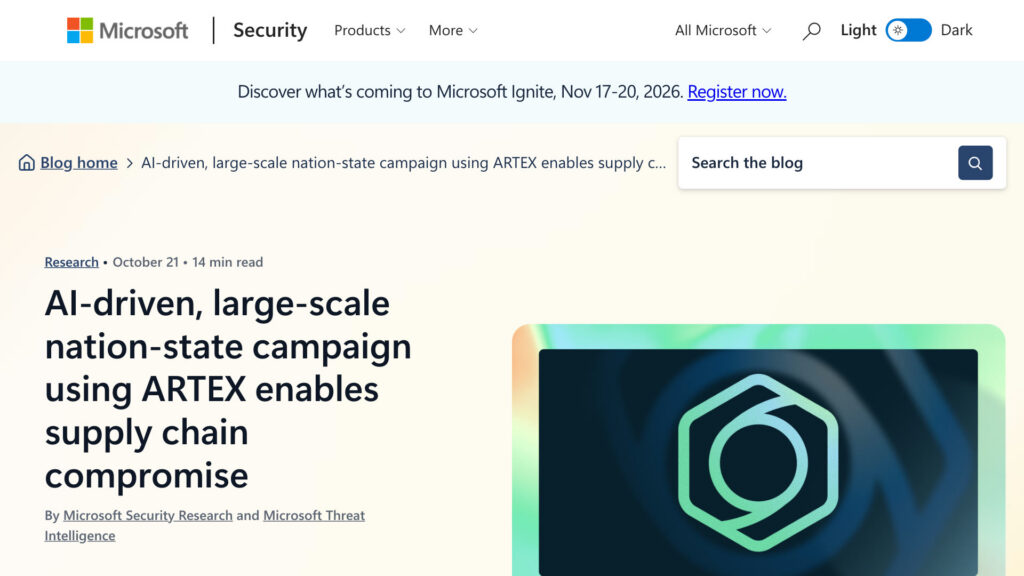
This is Microsoft’s attribution. It also stresses that successful sign-ins do not necessarily mean data was taken. Organisations that ever authorised ConnectWise Cloud Backup should keep those connections disabled, preserve logs and review OAuth app activity.
5. DuckDB 2.0 LTS adds an agent mode
DuckDB 2.0.0 “Cinnamon Teal” arrived on 21 October as a long-term support release, supported until at least October 2027. It adds asynchronous reads for Parquet, CSV and native files, a polished client-server mode with a new CONNECT statement, and an agent mode that prints compact output when an AI coding agent is driving the CLI.
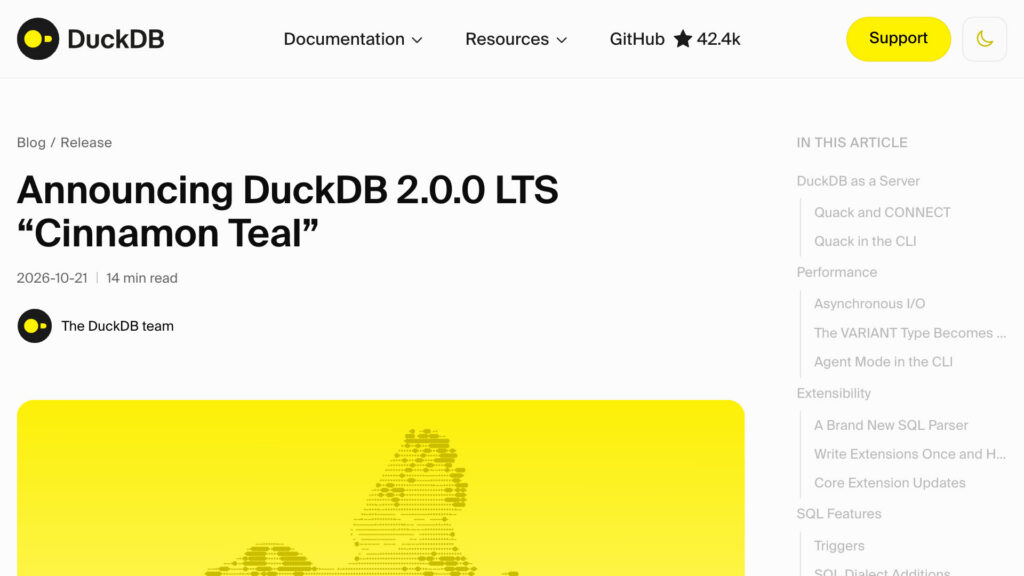
The team says agent mode cut the output a model had to read by 59 percent on TPC-H. A good-news story on a heavy day, but as with any major version, test before upgrading production.
Sources
- php.net: PHP security releases, 21 Oct 2026
- WIRED: Critical PHP vulnerabilities
- The Verge: PHP2Shell
- SafeDep: LiteLLM 1.107.0 compromise
- CNBC: OpenAI agents disabled safety monitoring
- Microsoft Security Blog: Storm-0940 / ARTEX
- CyberScoop: Microsoft attributes ConnectWise attack
- DuckDB: Announcing DuckDB 2.0.0
Leave a Reply